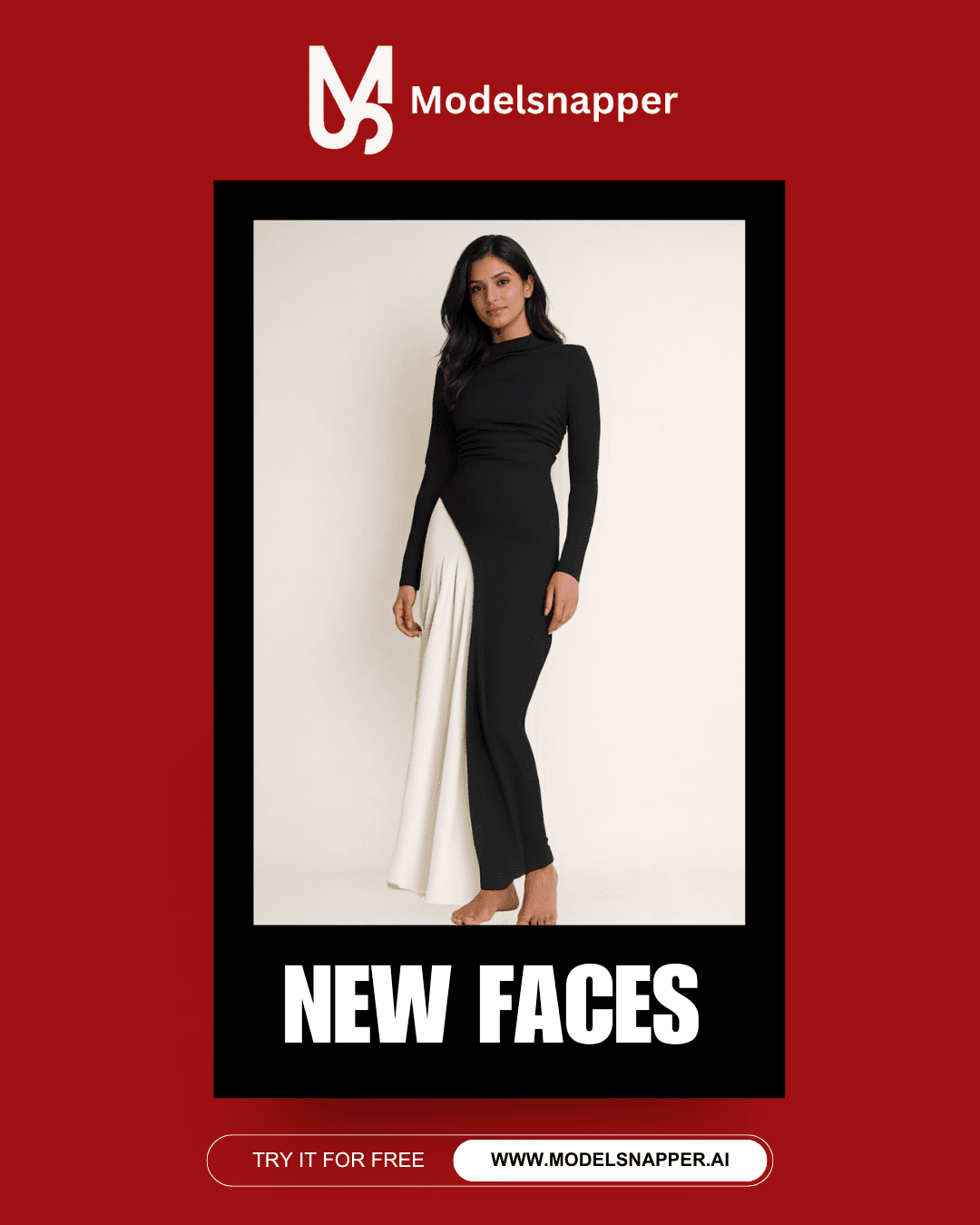
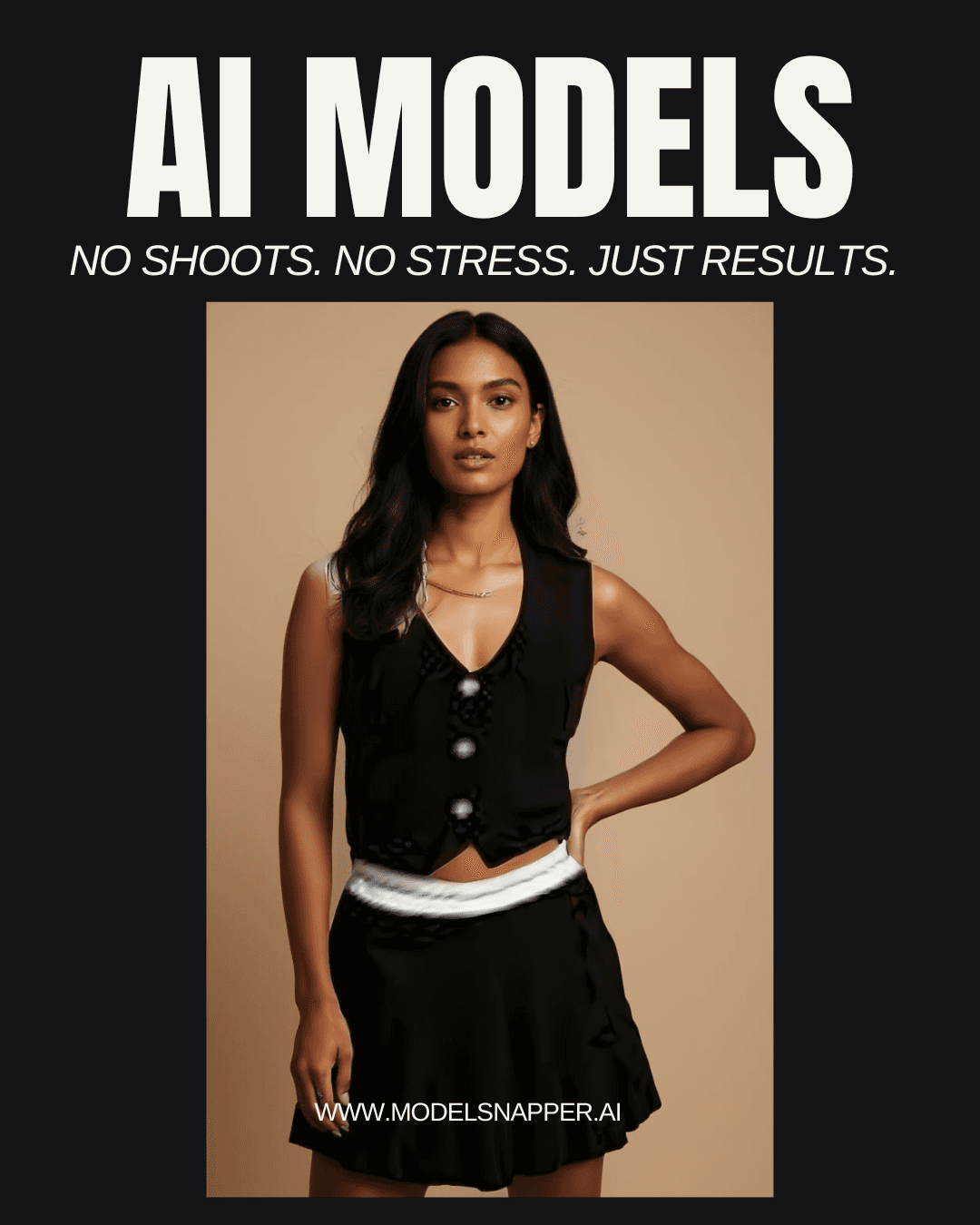
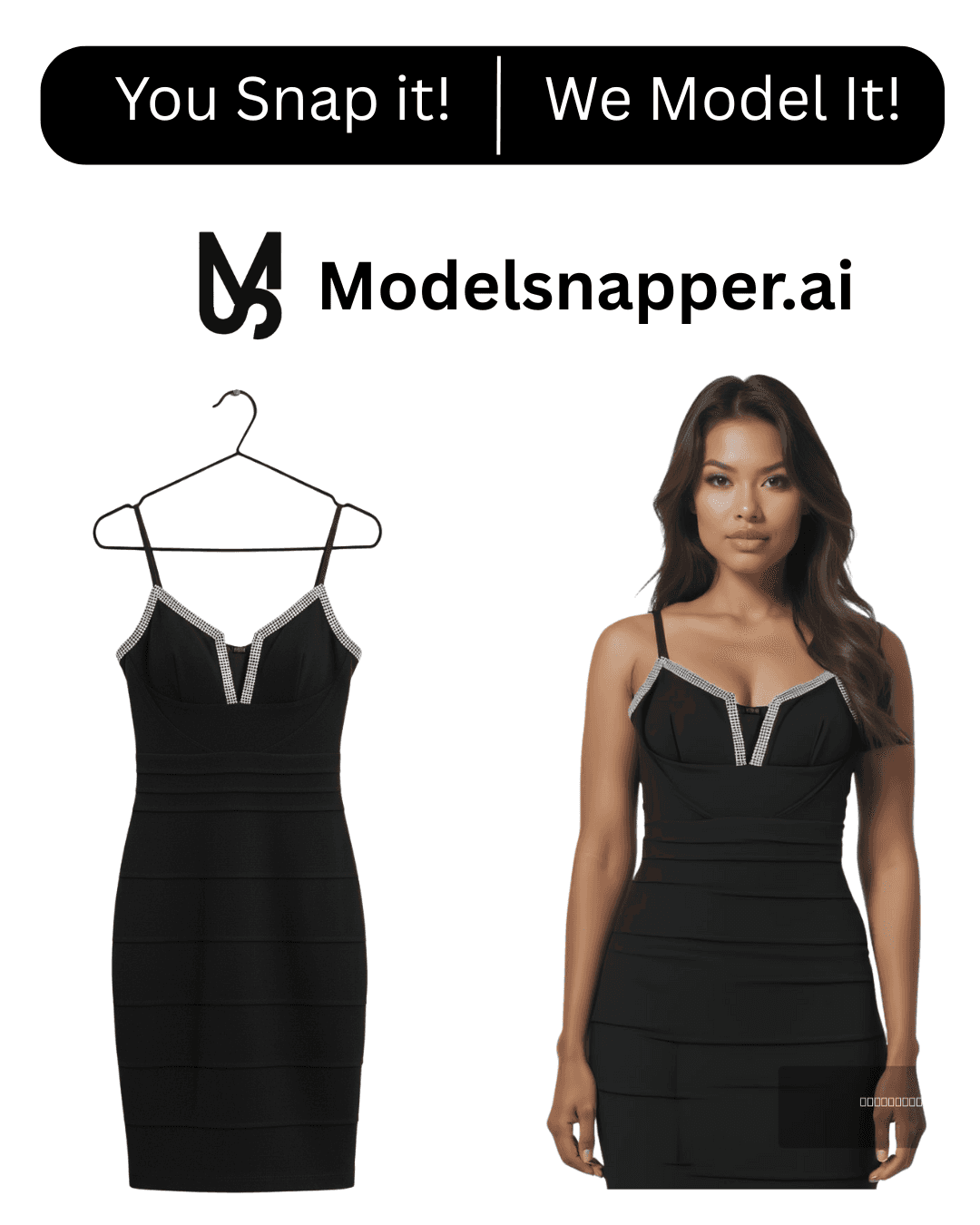
Why On-Model Product Photos Increase Fashion Sales in 2026
The data is clear — clothing brands that show products on models convert more. Here's why on-model fashion photography outperforms flat lay every time and what it means for your brand.
Hoshini Perera
Head of Marketing
Insight
If you run a clothing brand, you already know that product photography matters.
But do you know how much it matters — and which type of fashion photography actually converts best?
The data is clear: on-model product photography consistently outperforms flat lay and hanger images across every key e-commerce metric — from conversion rate to click-through rate and return rate.
In this article, we break down why on-model photography performs better and what it means for clothing brands in 2026.
What the Data Says About On-Model Fashion Photography
Research across major fashion e-commerce platforms shows a consistent pattern:
On-model product photos increase conversion rates by 20%–40% compared to flat lay images
Shoppers are 65% more likely to add a product to cart when they can see it worn on a model
Return rates decrease significantly when customers can see realistic garment fit before purchasing
Paid ad click-through rates improve by up to 40% when ads feature on-model imagery
The reason is simple.
Clothing is personal.
Shoppers don’t just want to see what the garment looks like. They want to understand how it fits, how it drapes, and how it looks on a body.
A flat lay shows the product.
An on-model photo shows the experience of wearing it.
Why Flat Lay Photography Falls Short
Flat lay photography has its place. It’s clean, minimal, and consistent.
But when it comes to clothing, it has three fundamental limitations.
1. It Removes Human Context
Clothing is designed to be worn.
When a garment is shown flat on a table or hanger, shoppers must mentally imagine how it will look on a body. That extra cognitive step introduces uncertainty — and uncertainty reduces conversions.
2. It Hides Fit Information
The number one reason clothing is returned online is poor fit expectations.
Flat lay photography provides almost no information about:
garment structure
drape and flow
sleeve length
waist positioning
overall proportions
On-model photos remove this ambiguity and give shoppers a clear visual understanding of fit.
3. It Weakens Emotional Connection
Fashion purchases are emotional.
Customers buy clothing because of how it makes them feel — confident, stylish, aspirational.
On-model photography creates that emotional connection.
Flat lay photography rarely does.
The Diversity Factor: Why Model Representation Matters
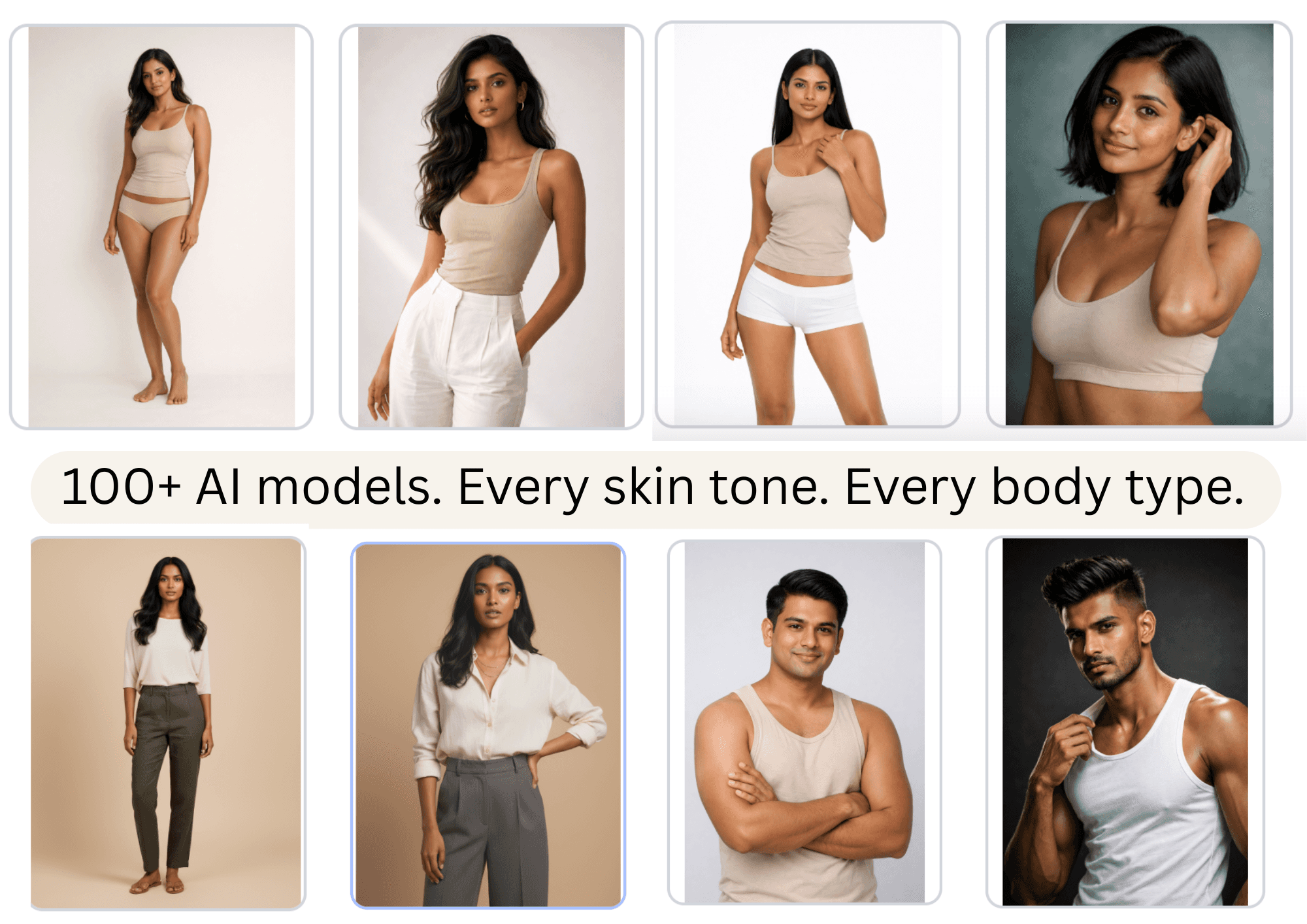
In 2026, model diversity is no longer optional — it is a conversion driver.
Research shows that shoppers convert at higher rates when they see products modeled by someone they can relate to.
This includes diversity across:
body types
skin tones
age groups
gender expression
A widely cited study found that brands introducing diverse model imagery experienced over 150% lift in click-through rates in paid advertising campaigns.
Why?
Because when shoppers see someone who looks like them wearing the product, they gain confidence that the item will work for them.
This is one reason AI fashion model generators are becoming essential tools for modern clothing brands.
They allow brands to showcase products on multiple model types without requiring multiple expensive photoshoots.
The Problem With Traditional Model Photography
Most clothing brands already understand the value of on-model photography.
The challenge has always been cost and complexity.
A typical fashion photoshoot requires:
Model booking: $200 – $1,500 per day
Studio rental: $500 – $2,000 per day
Photographer: $500 – $3,000 per day
Stylist: $300 – $1,000 per day
Post-production: $500 – $2,000
Total cost per shoot: $2,000 – $9,500+
For large fashion labels, this is manageable.
For independent boutiques, DTC brands, and Instagram sellers, it’s often a major barrier.
As a result, smaller brands rely on flat lay photography — not because it performs better, but because traditional on-model photography is expensive and slow.
How the Fashion Industry Is Solving This in 2026
The industry is now at a turning point.
AI fashion model generators are making on-model photography accessible to brands of every size.
Instead of organising a physical shoot, brands can upload garment images and generate photorealistic model photography in minutes.
The technology places garments onto AI models with realistic lighting, posture, and fabric draping.
For clothing brands, this unlocks new possibilities:
On-model photos for every product in the catalog
Consistent visual style across product pages
Diverse models across skin tones and body types
New collection imagery produced in minutes instead of weeks
Instant creative variations for ads and marketing
Interestingly, the brands adopting this technology fastest are not the largest ones.
They are independent boutiques, DTC brands, and small fashion startups that recognise they can now compete visually with much larger brands.
5 Ways On-Model Photography Improves Your Fashion Business
1. Higher Conversion Rates
On-model photos help customers understand fit, styling, and garment detail — the three factors that most influence buying decisions in fashion e-commerce.
2. Lower Return Rates
Returns cost the fashion industry billions each year.
Showing clothing on real bodies helps customers set accurate expectations before purchasing, reducing disappointment and returns.
3. Better Paid Ad Performance
Human-led visuals outperform product-only creatives.
On-model imagery consistently produces higher CTR, lower CPC, and stronger ROAS across Meta, TikTok, and Pinterest campaigns.
4. Stronger Brand Identity
Consistent on-model photography creates a cohesive visual identity across your catalog.
It signals professionalism and quality — both of which increase customer trust.
5. More Engaging Social Content
On-model content performs significantly better on platforms like:
Instagram
TikTok
Pinterest
Model-based visuals generate more saves, shares, and profile visits, helping brands grow organically.
What This Means for Clothing Brands in 2026
The evidence is overwhelming.
On-model photography is no longer optional for fashion brands — it is essential.
The difference today is that the barrier to producing it has disappeared.
AI fashion photography tools now allow brands to generate professional on-model images at a fraction of the cost and time of traditional photoshoots.
The brands that adopt this early will set the visual standard in their category.
Those that wait may find themselves competing against brands that convert better, advertise more efficiently, and build stronger visual identities — simply because they show their products more effectively.
The question is no longer whether on-model photography is worth it.
The data already answered that.
The real question is how quickly your brand can start producing it.